Best prompt engineering tools for teams and solo builders
What counts as a prompt engineering tool?
A prompt engineering tool helps you create, test, improve, organize, or reuse prompts. Some tools are simple template libraries. Others provide scoring, analytics, versioning, evaluation, or workflow automation.
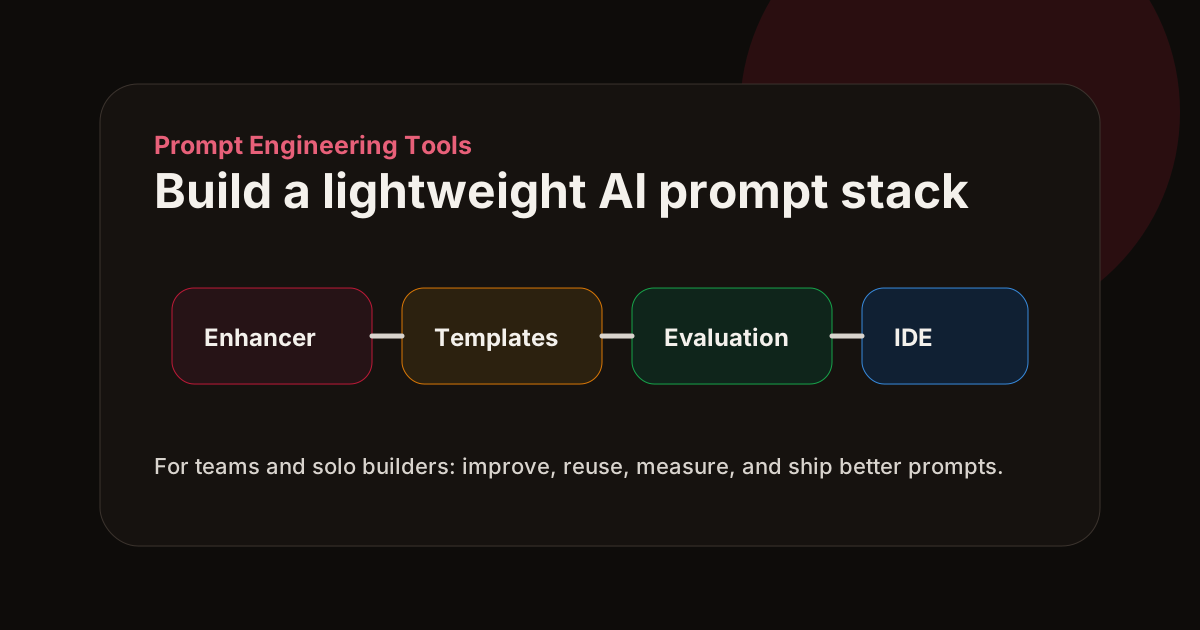
For most teams, the best stack includes four layers:
- A place to write prompts.
- A way to improve prompt quality.
- A library for reusable examples.
- A feedback loop that shows which prompts work.
Categories of prompt engineering tools
Prompt enhancers
Prompt enhancers improve a draft prompt before it reaches the model. They are useful for daily AI work because they fit into the moment where quality is easiest to change: before the answer is generated.
Template libraries
Template libraries give you reusable starting points. They are helpful for common tasks like writing emails, summarizing documents, coding, analysis, and ideation.
Evaluation tools
Evaluation tools compare model outputs against expected results. These matter when prompts power production workflows, not just one-off chat sessions.
IDE and browser extensions
Extensions reduce friction by bringing prompt engineering tools into the places people already work. AI Prompt Fixer supports browser-based AI chats and IDE workflows through VS Code and Cursor.
How to choose the right tool
Start with the problem you have. If people write vague prompts, use a prompt enhancer. If teams repeat the same workflows, build a prompt library. If prompts affect production output, add evaluations and version control.
For individual users and early teams, the highest-leverage first step is a real-time prompt enhancer. It improves daily prompts immediately and teaches better habits over time.
Recommended lightweight stack
For a small team, start with:
- AI Prompt Fixer for prompt scoring and rewrites.
- A shared document of proven prompts.
- A simple naming convention for prompt use cases.
- A monthly review of which prompts produced useful outputs.
That is enough to build prompt engineering discipline before investing in heavier infrastructure.