Claude prompt enhancer extension: context-aware rewrites for better answers
Why Claude users need a prompt enhancer
Claude is strong at reasoning, writing, and long-context work, but it still depends on the prompt you give it. A Claude prompt enhancer helps you turn a rough instruction into a complete request before Claude starts answering.
This matters most in long threads. Claude projects, artifacts, and document-heavy conversations often contain enough context to answer well, but a vague follow-up can still produce a vague result. A prompt enhancer makes the follow-up explicit.
What a Claude extension should do
A useful Claude extension should:
- Work directly inside claude.ai.
- Understand the current message, not just saved templates.
- Rewrite vague follow-ups with thread context.
- Preserve your intent and tone.
- Avoid getting in the way of Claude's native workflow.
AI Prompt Fixer runs beside the chat input and checks prompt quality while you type. When a prompt is weak, it can suggest a rewrite that gives Claude clearer instructions.
Example Claude workflow
Weak follow-up:
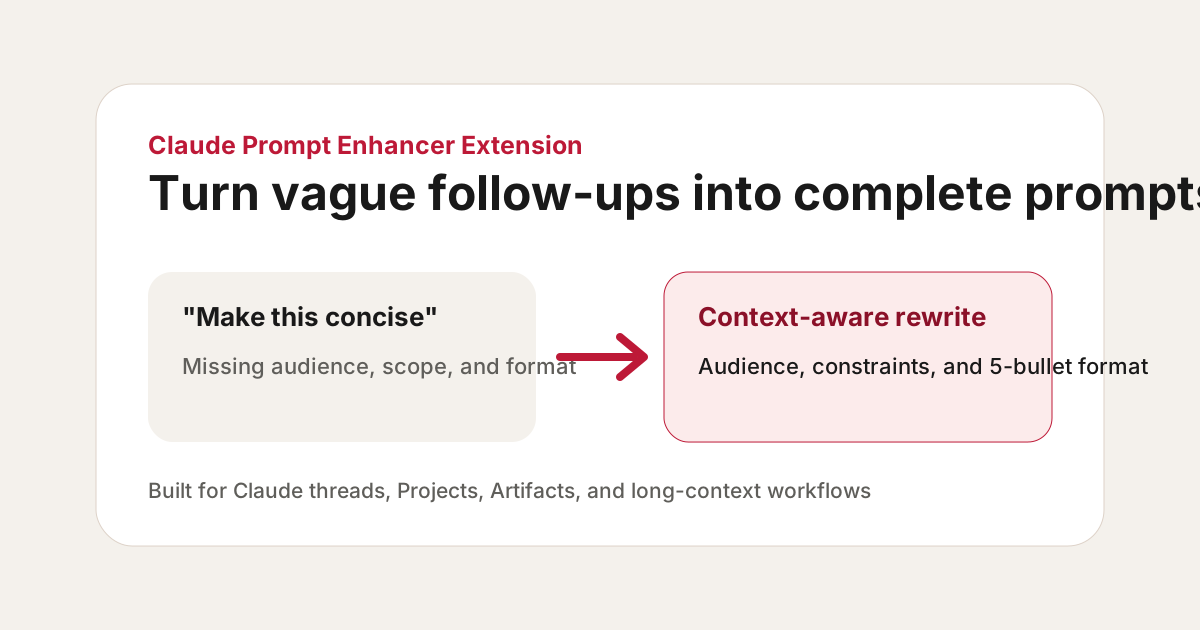
"Make this more concise."
Improved prompt:
"Rewrite the previous product strategy memo into a concise executive summary for a founder. Keep the market insight, risks, and next actions. Limit the answer to 5 bullets."
The improved prompt tells Claude which previous content to transform, who the reader is, what to keep, and how to format the answer.
Claude prompt enhancer vs template library
Templates help with repeatable tasks. A Claude prompt enhancer helps with live work. If you are mid-conversation, the right prompt depends on what Claude just wrote, what you rejected, and what you need next.
That is why context-aware rewriting is valuable. It turns short follow-ups into complete instructions without forcing you to restate the entire thread.
When to use it
Use a Claude prompt enhancer when you are asking for writing revisions, product strategy, research synthesis, code explanations, or long-document summaries. These tasks benefit from clear audience, scope, and output constraints.
For quick questions, type normally. For work you plan to reuse, score and improve the prompt first.