10 prompt writing tips that work on any AI model
10 prompt writing tips that work on any AI model
Good prompt writing is not about magic phrases. It is about reducing ambiguity. These prompt writing tips work across ChatGPT, Claude, Gemini, Perplexity, Cursor, and most modern AI tools.
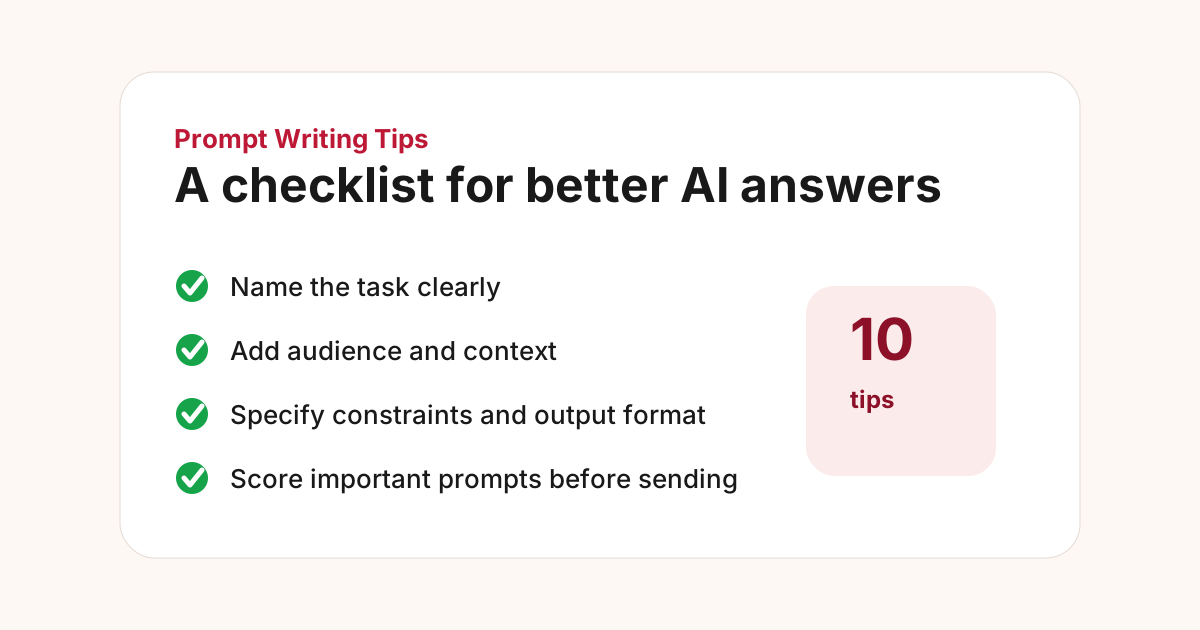
1. Name the task clearly
Start with the verb: summarize, rewrite, classify, debug, compare, plan, extract, generate, or critique. A clear task keeps the model from choosing the wrong mode.
2. Add the audience
"Explain OAuth" and "Explain OAuth to a non-technical founder" produce very different answers. Add the reader whenever tone, depth, or vocabulary matters.
3. Provide context before constraints
Context explains the situation. Constraints explain the boundaries. Put both in the prompt so the model understands what trade-offs it should make.
4. Specify the output format
Ask for bullets, a table, JSON, a code block, a checklist, or a short paragraph. Format clarity is one of the easiest ways to reduce follow-up messages.
5. Include examples when style matters
If you want the answer to match a voice, format, schema, or structure, include an example. Models imitate examples better than abstract style descriptions.
6. State what to avoid
Negative constraints help when the model commonly adds unwanted material. For example: "Do not include setup instructions" or "Avoid generic productivity advice."
7. Give success criteria
Tell the model what a good answer must accomplish. This is especially useful for strategy, code, and analysis prompts.
8. Use follow-ups with context
Instead of "make it better," say what should improve: shorter, more technical, more persuasive, safer, more specific, or easier to scan.
9. Ask for assumptions
When you do not have all the details, ask the model to list assumptions before answering. This makes hidden guesses visible.
10. Score before sending important prompts
For prompts that affect real work, use an AI prompt enhancer to catch missing specificity, context, and format clarity. AI Prompt Fixer can score a prompt and suggest a stronger rewrite before you send it to the model.
Prompt writing template
Use this pattern when you are stuck:
"Act as [role]. I need [task] for [audience/context]. Use [constraints]. Return [format]. Optimize for [success criteria]."
That single sentence covers most of the signals an AI model needs.